































































Perils of Online Classes: Parents Exhausted, Children Drained
The hidden cost parents have to pay beyond screens and classes

Sonal Chikara
For Nikita Khandelwal, a resident of RG Residency in Noida’s Sector 120 and a mother of two, every morning for the past one and a half months started with the same checklist: is the Wi-Fi working, laptop charged, Zoom link opened, microphone unmuted? She is now heaving a sigh of relief as schools have reopened after the harsh winter spell and GRAP-4 restrictions revoked, and her children are going to school.
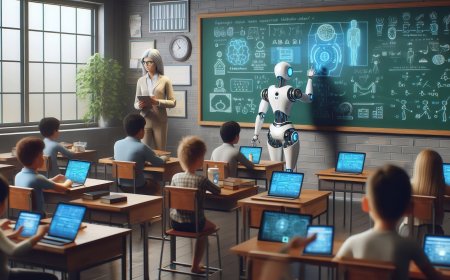
Introduced as a “convenient alternative” to classrooms, virtual classes have turned into an everyday struggle for families across India. Before parents even log into their own workdays, they are already sitting through their children’s classes. The reason – Online Classes.
When Learning Moves Home, Pressure Falls on Mothers
Covid-19 was when being online became a prominent part of our daily existence. Says Kaya Singh (35), mother of seven-year-old Reyansh, “After Covid-19, schools frequently shift between offline and online education, and this has created a lot of stress for working women. During office hours, I often have to constantly monitor my son’s online classes because, without guidance, he is unable to access the class.” Kaya works as a graphic designer in Noida.
Online education was introduced as a smart and modern solution, but inside many homes, it has slowly become a source of stress, confusion, and exhaustion. For some parents, especially mothers, online classes are no longer about education alone; they are about juggling work calls, household responsibilities, unstable internet, and a child who needs constant attention.
What looks simple on screen often turns complicated in real life, creating stress for both parents and children. Says Kaya, “Even on days when I have a holiday, and my child has online classes, most of my time goes into helping him attend them. My mother-in-law is not that tech-savvy and is unable to address technical problems. So sometimes, I have to keep calling and guide Reyansh on how to open links shared by teachers on WhatsApp.”
She further adds, “I feel offline classes are far better. Online learning is mostly theoretical and leads to cramming, whereas offline classes involve activities, interaction, and a proper routine for both parents and children.”
Work From Home, School From Home: A Broken Balance
Another mother, Nikita Khandelwal, a Noida-based graphic designer and mother of two, Divi (10) and Pravi (5), says, “Managing online classes is extremely difficult, especially when both my daughters have classes at the same time. I have to sit with my younger daughter throughout her class because she cannot understand what the teacher is saying online. The teacher only gives instructions; it’s the parents who have to do all the work, sidelining their own jobs.”
She adds, “Many times, I can’t even step away to drink water between their classes. I work from home, and my entire work schedule gets disturbed when there are online classes. Everything gets delayed.”
Nikita touches upon another major problem parents face with online classes: “Studying at home makes children feel too relaxed. They don’t take classes seriously the way they do in school. They often switch off the video, mute the audio, and don’t respond to teachers. Also, I have noticed children are hesitant to ask questions during online classes,” says she.
Nikita further points out that issues such as poor network and mostly one-way teaching make it harder for children to grasp the concepts.
Homemakers and the Digital Divide Inside Homes
Tina Dagar, a homemaker and mother of Aanaya (12) and Rahi (6), says, “As a homemaker, I am constantly managing the household and my children’s routines, but online classes have added a different kind of pressure. I am not very confident with digital platforms. Many times, learning gets disrupted because of small technical problems and my lack of efficiency in helping my child.” She further adds, “I strongly feel that being physically present in school helps children stay focused and socially engaged. Teachers can also observe students better. Also, children learn not just from books but also from interaction and classroom activities.”
Beyond Convenience: What Children Lose in Online Classrooms
During our conversation with parents, one of the most common concerns was that during online classes, children are not surrounded by their friends, and that makes the learning environment boring and dull for them. Also at home, there are many distractions - pets, household noise, toys, and daily activities, constantly pulling their attention away.
In offline classes, children feel active and very enthusiastic, but in Zoom meetings, they often feel drowsy. Children are hesitant to ask questions in online classes. The reality is that technology is very appealing to children, but if left unmonitored, they spend hours in front of the screen, leading to eye strain and other health problems.
What's Your Reaction?
 Like
1
Like
1
 Dislike
0
Dislike
0
 Love
0
Love
0
 Funny
0
Funny
0
 Angry
0
Angry
0
 Sad
0
Sad
0
 Wow
0
Wow
0