
































Celebrating The Timeless Vision Of Satish Gujral At Bikaner House
Currently on at Arzaani Atelier, Bikaner House, New Delhi, "Gujral Within: An Introspection" exhibition showcases powerful works from the last two decades of Gujral's life
Sonal Chikara
For art lovers seeing original works of a great master that have never been exhibited publicly before, up close, is a rare and much prized experience. The ongoing retrospective “Gujral Within: An Introspection” presents one such opportunity.

Currently on at Arzaani Atelier, Bikaner House, Pandara Road, New Delhi, the exhibition showcases powerful works from the last two decades of his life.
The exhibition marks the centenary of Satish Gujral (1925-2020). On till February 28, 2026, it is curated by Satish Gujral’s daughter and interior designer Raseel Gujral Ansal, in collaboration with Dhoomimal Art Centre, offering art lovers and collectors a rare opportunity to engage with her private collection.
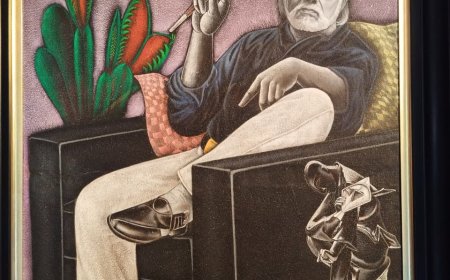
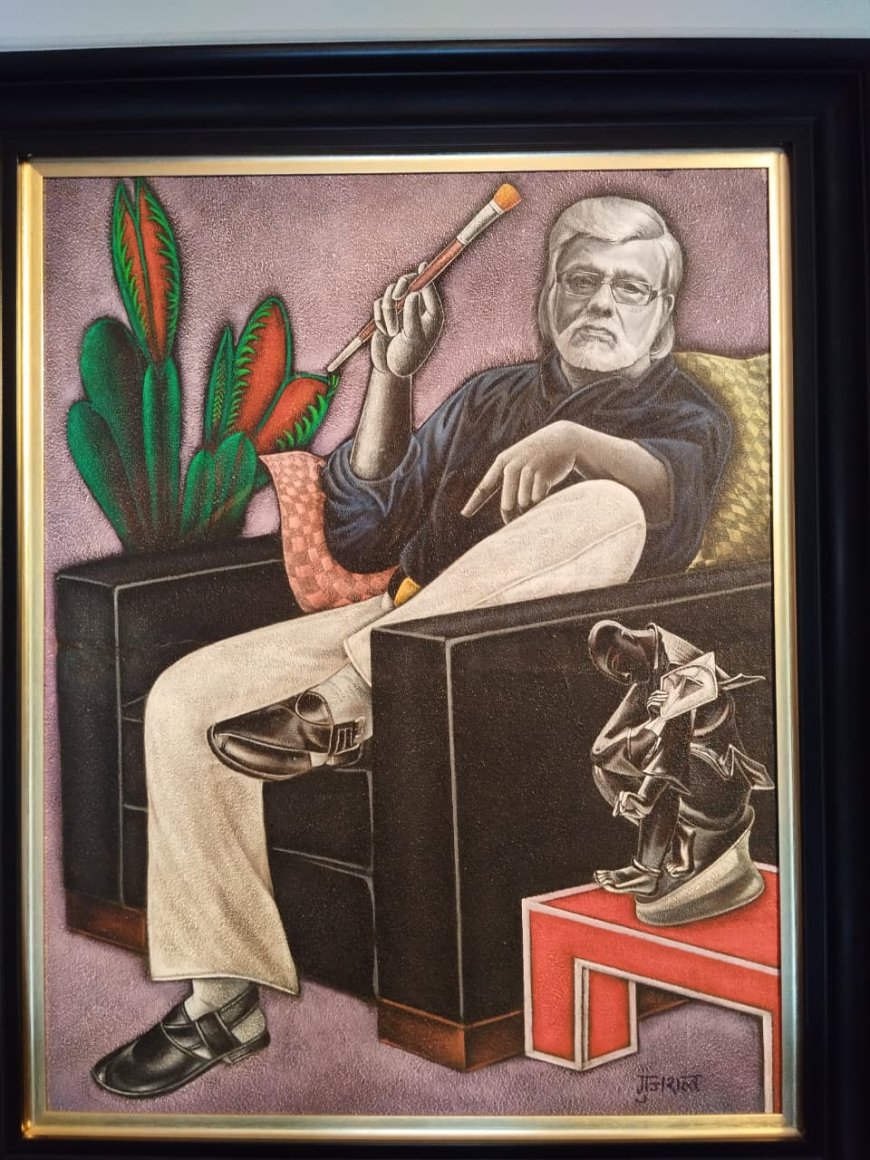
As we stepped into the corridor of Arzaani, a self-portrait of Satish Gujral welcomed us, portraying a calm yet powerful presence. His voice echoed softly through the speakers, making it feel as though he was still there — his presence inevitable and deeply felt.
Satish Gujral, a Padma Vibhushan awardee, is known for beautifully blending urban sophistication with rural simplicity. As an artist shaped by the Partition, his early works carried deep emotions and reflected both personal and national pain. His compositions often juxtaposed fragmented human forms with abstract backgrounds, creating a sense of movement and turmoil. His signature style features acrylic on textured canvas.


The Raas Series explores the eternal confluence of masculine and feminine energies protagonists entwined with elements of nature, birds and beasts. The compositions resonate with a quiet elegance, celebrating intimacy, harmony, and the rhythmic cycle of life.
The Liberty Series continues his exploration of the bond between humans and animals, especially the horse, emblematic of strength, struggle and spirit.
The Panchatantra series presents his early experiments with drawing and collage in a new way, inspired by folklore and myths. It shows his interest in how human and animal forms are connected.
The Industry Series, on the other hand, focuses on the changing relationship between man and machines, exploring the dynamic tension, interdependence and eventual triumph of the human spirit in the era of industrialisation.
What's Your Reaction?
 Like
2
Like
2
 Dislike
0
Dislike
0
 Love
0
Love
0
 Funny
0
Funny
0
 Angry
0
Angry
0
 Sad
0
Sad
0
 Wow
0
Wow
0