












































Noida Reacts To Union Budget 2026
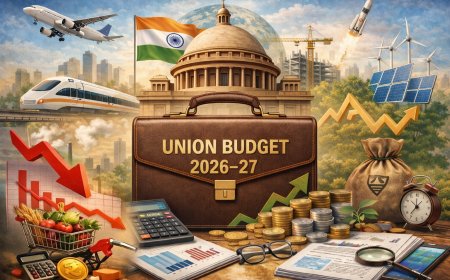
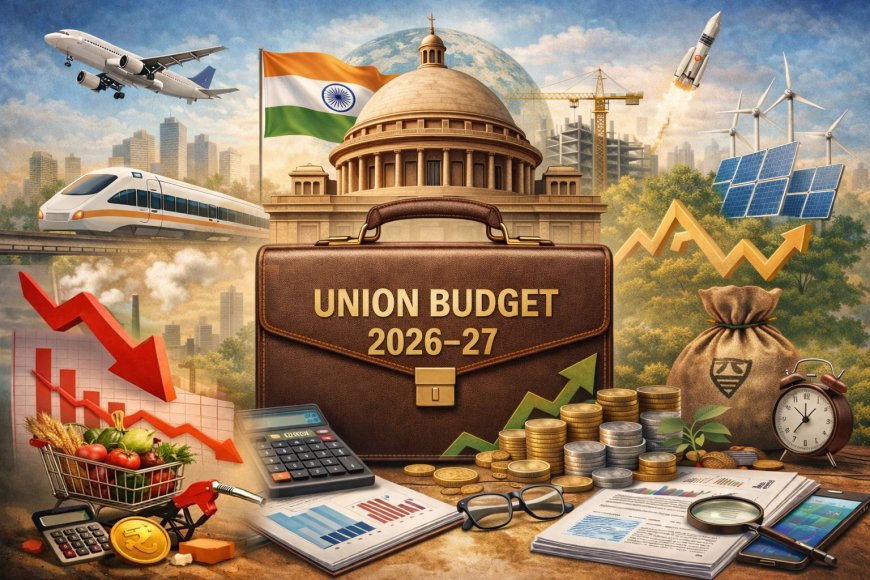
Finance Minister Nirmal Sitharaman presented the Union Budget 2026 on February 1. Since then, there have been good, bad and mixed reactions from netizens. We spoke to residents of Noida to know their views on the Budget. Here is what they said.
Prachi Khandelwal
After Finance Minister Nirmala Sitharaman presented the Union Budget 2026 on February 1, Happening Bazaar spoke to people from all walks of life, either residing or working in Noida, to know their views on the Budget. Some expressed satisfaction, others pointed at missing factors, and some also told us why the budget is not very middle-class friendly.

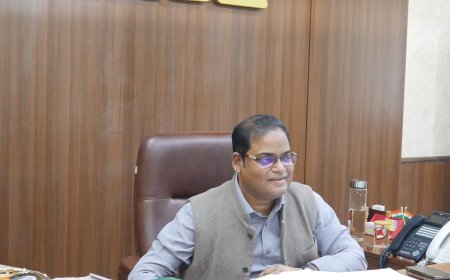
Sharma said the government’s focus is on improving tax collection and widening the tax base instead of putting extra pressure on taxpayers.
Is the budget middle-class friendly? Sharma says there is no direct relief for the middle class, but the intent is clear as the aim is to control rising inflation and protect subsidies for lower-income groups. “In that sense, the budget feels balanced to me,” he adds. Sharma opines that while big corporates may have expected more, the budget supports SMEs and private investment, and that is good.
“The idea is to create jobs without the government having to spend too much, and that is a sensible approach. I am happy that no new taxes have been added. It may not please everyone, especially with no big salary hikes or relief packages, but it shows the government’s limited fiscal space,” he says.
An Advocate’s Take: Balanced, Growth-oriented and Inclusive

“The budget is quite commendable. It focuses strongly on the youth by creating employment opportunities and addressing their aspirations,” says SP Tripathi, a Supreme Court lawyer living in Noida’s neighbourhood Vasundhara. For him, the budget is positive and forward-looking.
According to him, the budget aims to strengthen the rural economy with special attention on youth, farmers, women, and also micro, small and medium enterprises (MSMEs). “I believe the government has worked for all sections of society in this budget. This budget supports economic progress and moves India closer to becoming a developed nation and a global leader by 2047,” he opines. Tripathi also appreciates the government for increasing defence spending.
Is the budget middle-class friendly? Tripathi says that economic growth itself benefits the middle class the most. “When jobs are created, and the economy grows, the middle class also gains. Also, there is no negative change in the income tax slabs, which the middle class keeps a close watch on,” he says.
Tripathi is happy but has only one concern: that more funds should have been given to infrastructure and education. “Quality improves only when investment increases,” he says, adding that while medical education has received attention, the allocation is still not enough.
A Chartered Accountant’s Take: A Viksit Bharat Budget

Jayendra Malhotra, a chartered accountant and a resident of Noida, welcomes the strong push towards capital expenditure, calling it one of the biggest positives. “I am very happy to see the capex of around ₹12.25 lakh crore for infrastructure and development. More investment means more jobs and faster economic growth,” he says.
Malhotra also appreciates the focus on MSMEs, noting that around ₹10,000 crore has been allocated to the sector. Explaining the long-term impact, he says, “With seven new rail corridors announced, better infrastructure will reduce logistics costs. Currently, at least Rs 13 out of the Rs 100 we spend goes on logistics.”
Malhotra denies that the middle class has been ignored in Budget 2026. “I understand the middle class had expectations, but I was not surprised. Income tax and GST provisions were already decided well before the budget,” Malhotra says. However, Malhotra would have been more pleased if the standard deduction increased from ₹75,000 to ₹1,00,000, or if there was some relief in capital gains or in the ₹12 lakh slab. “Maybe we will see that in the next budget,” he says.
Highlighting key economic indicators, Malhotra explains that the debt-to-GDP ratio has come down to around 55 per cent, and the fiscal deficit has reduced from 4.4 per cent to 4.3 per cent. “This shows we are moving in the right direction,” he says, adding that overall, this is a Viksit Bharat budget. It is much better than what I expected and clearly moves us towards the 2047 goal.”
A Student’s Take: Growth-oriented But Ignores Social Sector

Siddharth Rana, a third-year law student of Bennett University in Greater Noida, says he was not fully satisfied with this year’s budget. “I feel the budget is growth-oriented, but it is more focused on manufacturing and industrial sectors than on the middle class. It may deliver long-term growth, but it falls short in offering direct relief to the middle class and farmers,” he says.
He points out that middle-class expectations, especially regarding tax relief or changes in slabs, have also not been met. “There has been no direct relief for middle-class earners. The focus is more on reducing debt and increasing the country’s GDP,” he says.
Siddharth is not completely negative, though. “As an upper-middle-class citizen, I am satisfied with the funds allotted for development. Projects like high-speed trains will ultimately benefit everyone. The EV sector will see a big boost because customs duties on batteries, solar panels and EV parts have been reduced,” he says.
What's Your Reaction?
 Like
6
Like
6
 Dislike
0
Dislike
0
 Love
0
Love
0
 Funny
0
Funny
0
 Angry
0
Angry
0
 Sad
0
Sad
0
 Wow
1
Wow
1