
























































AI in Education: Adaptive Learning and Intelligent Classrooms
From personalised tutors to automated lesson planning, Artificial Intelligence is now a classroom experiment; transforming syllabus, teaching and students' journey
Vivek Kumar Srivastava
According to an International Data Corporation (IDC) report, use of generative Artificial Intelligence (AI) increased from 45 per cent in 2023 to 86 per cent in 2024, the highest rate for any industry. The education sector across the world is accelerating into an era where intelligence, adaptability and inclusion are no longer aspirations.
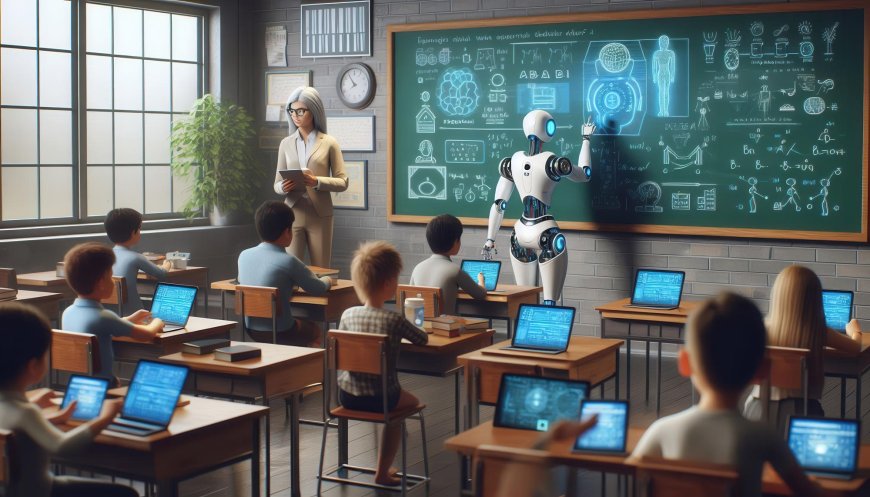
Al is engineered into the daily rhythm of classrooms across the world. A student in a remote place can receive real-time personalised feedback from an AI tutor, a teacher can generate an entire week's lesson plan in under minutes, and a university administrator can track every student's learning pathway with a single dashboard.
From Curiosity to Core Infrastructure
Today, AI has become a structural force reshaping how teaching happens, how learning is experienced, and how education systems scale.
The change is momentous: Today's AI platforms actually understand learning goals, grade expectations, assessments, and teaching methods, without teachers having to guide them at every stage.
The Personalised Learning Revolution
AI is modifying platforms according to each student's pace, level of understanding, and style of learning. Programs.com, the cybersecurity educations and careers guide, has compiled data that claims approximately 30% of students in K-12 use AI tools at least once a day, and 53% of students use AI tools to help them with their homework.
Did You Know?
Microsoft 365 Copilot Chat was one of the most vivid information points in AI education research in 2022, as students considered that the use of this product contributed to self-directed learning by 265%.
Mexican institutions such as Tecnológico de Monterrey (Tec) are putting AI, real-world problem solving, and industry collaboration into their curriculum and collaborating with Salesforce, AWS, Oracle, and global networks such as the World Economic Forum. And what is the result? More than 93% are employable within a period of three months.
Teachers: Empowered, Not Replaced
Survey data from the Centre for Democracy and Technology, cited by Faculty Focus, shows that 69% of teachers say AI tools have improved their teaching methods, while 55% agree that it has given them more time to interact directly with their students.
Research increasingly shows that teachers adopt AI most readily when it saves them between five and ten hours per week without compromising on instructional quality. By 2026, this time-saving metric will become a key predictor of AI retention in schools.
Smart Campuses and AI-Driven Administration
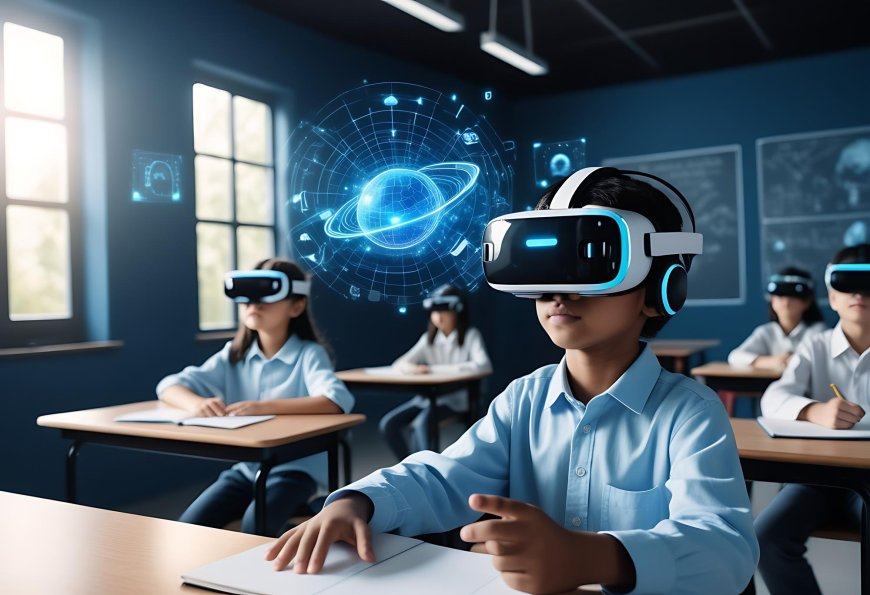
The transformation is not limited to classrooms. University administrators state that their tasks reshaped as rapidly as their teachers'. According to eCampus News, 2026 may mark the moment many campuses move from pilot projects to full-scale integration — with mainstreaming of automated tutoring, intelligent course design, immersive virtual labs, and blockchain-backed credentialing.
What Lies Ahead
According to AI in Education Market Report 2025 published by Market Research Store, Research and Markets, AI in education market size is expected to grow to $30.28 billion in 2029.
Upskilling and reskilling are no longer optional; they have become a necessity.
What's Your Reaction?
 Like
0
Like
0
 Dislike
0
Dislike
0
 Love
0
Love
0
 Funny
0
Funny
0
 Angry
0
Angry
0
 Sad
0
Sad
0
 Wow
0
Wow
0